
What is a bypoll (by-election) and when is one held?
A general election does not fill every vacancy that arises later. When an MP or MLA dies, resigns or is disqualified mid-term, a by-election is held for that one seat. Here are the rules.
By the Janadesh Online editorial team. Facts last checked against the sources below on 25 September 2026.
What a by-election is
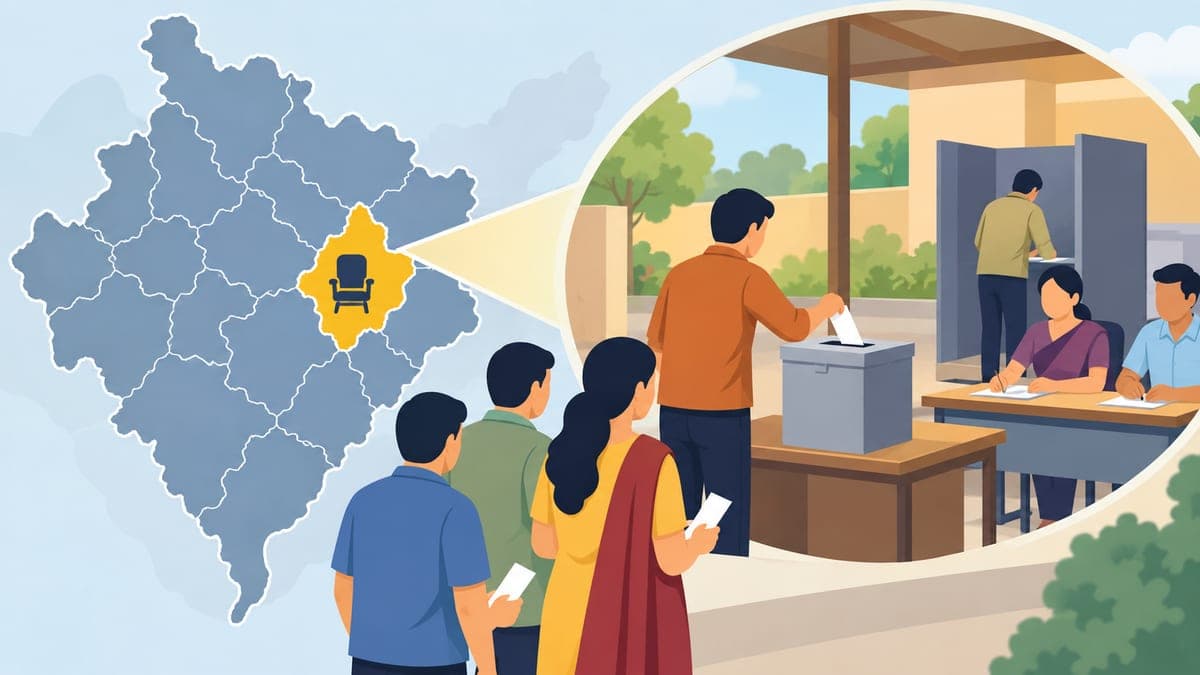
A by-election, or bypoll, fills a vacancy in the Lok Sabha, the Rajya Sabha, a state Legislative Assembly or a Legislative Council between general elections. Under the Representation of the People Act, 1951, the Election Commission issues a notification calling on the constituency to elect a person to fill the vacancy.
A seat becomes vacant in several ways. A member can resign in writing to the Speaker or Chairman, and the seat falls vacant once it is accepted. A member can be disqualified under Article 102. A House can also declare a seat vacant if the member is absent without permission for 60 days. A member's death, or an election being declared void, also creates a vacancy. See the upcoming bypolls and other elections on this site.
The six-month rule
- 6 monthsDeadline to hold a bye-election from the date the vacancy occurs
- 1 yearIf the remainder of the term is less than this, the six-month rule does not apply
Section 151A says a by-election "shall be held within a period of six months from the date of the occurrence of the vacancy". The provision was inserted in 1996 and covers vacancies in the Council of States, the House of the People, State Assemblies and State Councils.
There are two exceptions. The six-month rule does not apply where the remainder of the member's term is less than one year, or where the Election Commission, in consultation with the Central Government, certifies that it is difficult to hold the by-election within that period.
The second exception has been litigated. A Bombay High Court judgment of 13 December 2023 considered the six-month rule and the one-year proviso. We do not give a count of delayed by-elections because we have not verified one.
How long the winner serves
A member chosen to fill a casual vacancy in the Rajya Sabha serves the remainder of their predecessor's term (section 154(3)). For the Lok Sabha and Assemblies, the winner sits for the remainder of that House's term, which runs five years from its first meeting unless it is dissolved sooner.
When one winner holds two seats
A person can contest more than one seat, and this is a common source of by-elections. Section 33(7) limits a candidate to two constituencies in a general election to the House of the People, and likewise for Assemblies. If someone is elected to more than one seat, section 70 provides that unless they resign all but one within the prescribed time, all the seats become vacant.
- Two seats in the same kind of House: Rule 91 of the Conduct of Elections Rules, 1961 sets the time at fourteen days from the date of election.
- A seat in Parliament and a state legislature at once: under the Prohibition of Simultaneous Membership Rules, 1950, the Parliament seat becomes vacant unless the state seat is resigned within fourteen days of the later gazette publication. For two different states the period is ten days.
- A seat in both Houses of Parliament: the member may say within ten days which they wish to keep; otherwise the Council of States seat becomes vacant (section 68). A member of one House who is elected to the other loses the first seat when they are chosen (section 69).
The Model Code of Conduct in a by-election
The Election Commission's FAQ says that in a by-election the Model Code applies only in the area of the constituency if it lies within a State Capital, Metropolitan City or Municipal Corporation. In all other cases it is enforced across the entire district or districts that cover the constituency. Read the Model Code of Conduct explainer for the rules themselves.
Frequently asked questions
How soon must a by-election be held?
Within six months of the vacancy, under section 151A of the Representation of the People Act, 1951. That does not apply if the remainder of the term is less than one year, or if the Election Commission certifies, in consultation with the Central Government, that it is difficult to hold it in that time.
Who announces a by-election?
The Election Commission, by a notification calling on the constituency to elect a person to fill the vacancy.
How long does the winner of a by-election serve?
For the remainder of the term. In the Rajya Sabha that is the predecessor's remaining term. In the Lok Sabha and Assemblies it is the remaining life of that House.
What if someone wins two seats?
They must resign all but one within the prescribed time or all seats become vacant. For two seats in the same kind of House, the time is fourteen days from the election.
Does the Model Code of Conduct apply across the state in a by-election?
No. It applies in the constituency itself if it is in a State Capital, Metropolitan City or Municipal Corporation, and otherwise across the district or districts covering the constituency.
Sources
- Representation of the People Act, section 151A
- The Representation of the People Act, 1951 (PDF, Delhi State Election Commission copy)
- Constitution of India, Article 101
- Conduct of Elections Rules, 1961 (Part VII, counting for the Council of States)
- ECI: Model Code of Conduct FAQ
Janadesh Online is independent and not affiliated with the Election Commission of India. Rules and procedures can change between elections; the Commission’s own notices are the authority. Spotted an error? Tell us on the contact page.