Chief Ministers of Jammu and Kashmir
12 people have held the office, across 18 terms, from formation to today.
Every Chief Minister
Most recent first, with a short biography where one is available.
4 Apr 2016 – 19 Jun 2018 · 2 years, 2 months
Mehbooba Mufti Sayed (born 22 May 1959) is an Indian politician and leader of the Jammu and Kashmir People's Democratic Party (PDP). She served as the 9th chief minister of the erstwhile state Jammu and Kashmir from 4 April 2016 to 19 June 2018. Mufti was the first woman to hold the office of chief minister in the Jammu and Kashmir. Wikipedia →
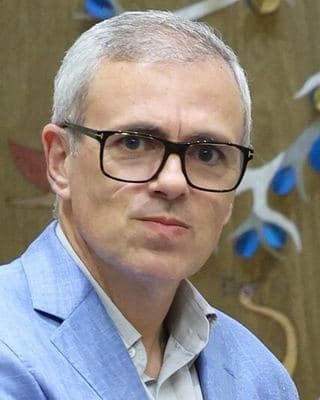
Omar Abdullah
Incumbent5 Jan 2009 – present · 7 years, 10 months · 2 terms
Omar Abdullah (born 10 March 1970) is an Indian politician serving as the chief minister of union territory of Jammu and Kashmir since 2024 and also as the leader of the house in J&K Legislative Assembly. He had previously served as the 8th chief minister of the state of Jammu and Kashmir between 2009 and 2014, and is the current vice president of the Jammu & Kashmir National Conference, a position he has held since 2009 and also previously served as its president. Abdullah also served as a member of parliament in the Lok Sabha from 1998 to 2009, representing the Srinagar parliamentary constituency, and was a union minister of State for External Affairs. Wikipedia →
2 Nov 2005 – 11 Jul 2008 · 2 years, 8 months
Ghulam Nabi Azad (born 7 March 1949) is an Indian politician who served as Leader of Opposition in Rajya Sabha between 2014 and 2021. He also served as the Chief Minister of erstwhile state of Jammu and Kashmir from 2005 to 2008. On 26 September 2022, Azad announced his own political party as Democratic Progressive Azad Party. Wikipedia →
2 Nov 2002 – 7 Jan 2016 · 3 years, 10 months · 2 terms
Mufti Mohammad Sayeed (12 January 1936 – 7 January 2016) was an Indian politician who served as the chief minister of Jammu and Kashmir twice from November 2002 to November 2005 and from March 2015 until his death on January 7, 2016. He held various positions, including minister of Tourism in Rajiv Gandhi's cabinet and minister of Home Affairs in V. P. Singh's cabinet. Sayeed began his political career in the wing of the National Conference led by G. M. Sadiq, which later merged with the Indian National Congress. Wikipedia →
2 Jul 1984 – 6 Mar 1986 · 1 year, 8 months
Ghulam Mohammad Shah or G. M. Shah or Gul Shah (20 July 1920 – 6 January 2009) was an Indian politician who was Chief Minister of the state of Jammu and Kashmir from 2 July 1984 to 6 March 1986. He succeeded his brother-in-law Farooq Abdullah. Shah's father-in-law was Sheikh Mohammad Abdullah, the founder of the Jammu and Kashmir National Conference, of which Shah was once a senior member. Wikipedia →
8 Sep 1982 – 18 Oct 2002 · 11 years · 3 terms
Farooq Abdullah (born 21 October 1937) is an Indian politician who serves as current president of the Jammu & Kashmir National Conference. He has served as the chief minister of Jammu and Kashmir on several occasions since 1982 till 2002, and as the union minister for New and Renewable Energy between 2009 and 2014. His father Sheikh Abdullah was the 1st elected chief minister of Jammu and Kashmir. Wikipedia →
12 Dec 1971 – 25 Feb 1975 · 3 years, 2 months
Syed Mir Qasim (17 March 1921 – 12 December 2004) was an Indian politician who served as the 2nd chief minister of Jammu and Kashmir from 1971 to 1975. Qasim's political career first began during the British Raj, when he became a leader of the non-sectarian, pro-democracy Quit Kashmir political movement. His advocacy against the monarchical rule of Maharaja Hari Singh resulted in his imprisonment. Wikipedia →
Ghulam Mohammed Sadiq
29 Feb 1964 – 12 Dec 1971 · 7 years, 9 months
Ghulam Mohammed Sadiq (1912 – 1971) was an Indian politician, who served as the Prime Minister of Jammu and Kashmir from 1964 to 1965, when the position was renamed to Chief Minister. He continued as the Chief Minister till his death in 1971. Wikipedia →
Khwaja Shams-ud-Din
12 Oct 1963 – 29 Feb 1964 · 4 months
Khwaja Shams-ud-Din (1922 – 19 April 1999) was the Prime Minister of Jammu and Kashmir for a brief period of time from 12 October 1963 to 29 February 1964. He was first elected to the Legislative Assembly in 1956 and re-elected in 1962, 1967 and 1972. It was during his administration, on 26 December 1963, that the Proposed Prophet's Relic was stolen from the Hazratbal Shrine. Wikipedia →
Bakshi Ghulam Mohammad
9 Aug 1953 – 12 Oct 1963 · 10 years, 2 months
Bakshi Ghulam Mohammad (20 July 1907 – 15 July 1972) was an Indian politician who served as the prime minister of Jammu and Kashmir from 1953 to 1964. Bakshi was a founding member of the National Conference and rose to be the second in command to the principal leader Sheikh Abdullah. He served as the deputy prime minister of the State of Jammu and Kashmir between 1947 and 1953, but disagreed with Abdullah's advocacy of independence for the state in 1953. Wikipedia →
Sheikh Abdullah
5 Mar 1948 – 8 Sep 1982 · 12 years, 8 months · 3 terms
Sheikh Mohammad Abdullah (5 December 1905 – 8 September 1982) was an Indian politician who played a central role in the politics of Jammu and Kashmir. Abdullah was the founding leader and President of the All Jammu and Kashmir Muslim Conference (later renamed Jammu and Kashmir National Conference). He agitated against the rule of the Maharaja Hari Singh and urged self-rule for Kashmir. Wikipedia →
Mehr Chand Mahajan
15 Oct 1947 – 5 Mar 1948 · 4 months
Mehr Chand Mahajan (23 December 1889 – 11 December 1967) was an Indian jurist and politician who was the third chief justice of the Supreme Court of India. Prior to that he was the prime minister of the state of Jammu and Kashmir during the reign of Maharaja Hari Singh and played a key role in the accession of the state to India. He was the Indian National Congress nominee on the Radcliffe Commission that defined the boundaries of India and Pakistan. Wikipedia →
Full timeline
Every term and every President's or Governor's Rule interval, most recent first.
| 16 Oct 2024 – present | Omar Abdullah | JKN | 1 year, 10 months |
| 31 Oct 2019 – 15 Oct 2024 | President's / Governor's Rule — No Chief Minister existed. On 5 August 2019 Parliament revoked J&K's special status under Article 370 and split the state into two Union Territories effective 31 October 2019. The new UT of J&K had no legislative assembly and was governed directly under President's Rule via the Lieutenant Governor until the assembly was restored following the 2024 election; Omar Abdullah was sworn in as CM on 16 October 2024 | 4 years, 11 months | |
| 20 Dec 2018 – 30 Oct 2019 | President's / Governor's Rule — Governor's Rule converted to President's Rule; the assembly was later dissolved on 21 November 2018 | 10 months | |
| 20 Jun 2018 – 19 Dec 2018 | President's / Governor's Rule — Governor's Rule after the BJP withdrew from its coalition with the PDP | 5 months | |
| 4 Apr 2016 – 19 Jun 2018 | Mehbooba Mufti | PDP | 2 years, 2 months |
| 7 Jan 2016 – 4 Apr 2016 | President's / Governor's Rule — Governor's Rule following the death of Chief Minister Mufti Mohammad Sayeed | 2 months | |
| 1 Mar 2015 – 7 Jan 2016 | Mufti Mohammad Sayeed | PDP | 10 months |
| 8 Jan 2015 – 1 Mar 2015 | President's / Governor's Rule — Governor's Rule during coalition talks | 1 month | |
| 5 Jan 2009 – 8 Jan 2015 | Omar Abdullah | JKN | 6 years |
| 11 Jul 2008 – 5 Jan 2009 | President's / Governor's Rule — Governor's Rule following collapse of the PDP-Congress coalition | 5 months | |
| 2 Nov 2005 – 11 Jul 2008 | Ghulam Nabi Azad | INC | 2 years, 8 months |
| 2 Nov 2002 – 2 Nov 2005 | Mufti Mohammad Sayeed | PDP | 3 years |
| 18 Oct 2002 – 2 Nov 2002 | President's / Governor's Rule — Brief Governor's Rule / caretaker period | 15 days | |
| 9 Oct 1996 – 18 Oct 2002 | Farooq Abdullah | JKN | 6 years |
| 19 Jul 1990 – 9 Oct 1996 | President's / Governor's Rule — President's Rule, the longest such spell in J&K's history, during the peak of insurgency | 6 years, 2 months | |
| 19 Jan 1990 – 19 Jul 1990 | President's / Governor's Rule — Governor's Rule imposed amid rising militancy following Farooq Abdullah's resignation | 6 months | |
| 7 Nov 1986 – 19 Jan 1990 | Farooq Abdullah | JKN | 3 years, 2 months |
| 6 Sep 1986 – 7 Nov 1986 | President's / Governor's Rule — Governor's Rule converted to President's Rule | 2 months | |
| 6 Mar 1986 – 6 Sep 1986 | President's / Governor's Rule — Governor's Rule imposed after collapse of Ghulam Mohammad Shah ministry | 6 months | |
| 2 Jul 1984 – 6 Mar 1986 | Ghulam Mohammad Shah | ANC | 1 year, 8 months |
| 8 Sep 1982 – 2 Jul 1984 | Farooq Abdullah | JKN | 1 year, 9 months |
| 9 Jul 1977 – 8 Sep 1982 | Sheikh Abdullah | JKN | 5 years, 1 month |
| 26 Mar 1977 – 9 Jul 1977 | President's / Governor's Rule — Governor's Rule following dismissal of Sheikh Abdullah's ministry | 3 months | |
| 25 Feb 1975 – 26 Mar 1977 | Sheikh Abdullah | JKN | 2 years, 1 month |
| 12 Dec 1971 – 25 Feb 1975 | Syed Mir Qasim | INC | 3 years, 2 months |
| 29 Feb 1964 – 12 Dec 1971 | Ghulam Mohammed Sadiq | INC | 7 years, 9 months |
| 12 Oct 1963 – 29 Feb 1964 | Khwaja Shams-ud-Din | JKN | 4 months |
| 9 Aug 1953 – 12 Oct 1963 | Bakshi Ghulam Mohammad | JKN | 10 years, 2 months |
| 5 Mar 1948 – 9 Aug 1953 | Sheikh Abdullah | JKN | 5 years, 5 months |
| 15 Oct 1947 – 5 Mar 1948 | Mehr Chand Mahajan | IND | 4 months |
Full history from 1947 onward. From 1947 to 30 March 1965 the head of government held the title 'Prime Minister' (Wazir-e-Azam), not 'Chief Minister'; the title changed mid-tenure for Ghulam Mohammed Sadiq, listed as one continuous entry. Ghulam Mohammad Shah's party abbreviation 'ANC' was invented as it was not in the supplied list. The 2019-2024 gap reflects the actual abolition of statehood and the legislative assembly itself.